
Commercial Real Estate Due Diligence in Louisiana: What to Check Before You Close
Due diligence is the least glamorous part of a commercial deal and the part that actually protects your money. The letter of intent gets the excitement. The purchase agreement gets the signatures. The thirty to forty-five days after that, when you are supposed to be reading every document the seller has ever generated on the property, is where deals get saved or blown up. I would rather kill a bad deal in due diligence than close it and find out the hard way. Here is what that period needs to cover in Louisiana specifically, because our rules are not the rules you learned buying property somewhere else.
Louisiana Runs on a Different Code
Every other state operates on common law. Louisiana runs on the Napoleonic Code, and that difference shows up in real property more than almost anywhere else. We have servitudes, not easements, and a predial servitude can sit quietly on a title for decades before it costs you a building pad you were counting on. Louisiana is also a community property state, so if the seller is married, both spouses typically have to sign, even if only one name is on the deed. Mineral rights here are frequently severed from the surface estate, which means the person selling you the dirt may not own what is under it. None of this is exotic if your title attorney works Louisiana deals every week. It is a real problem if they do not.
Title and Survey Come First
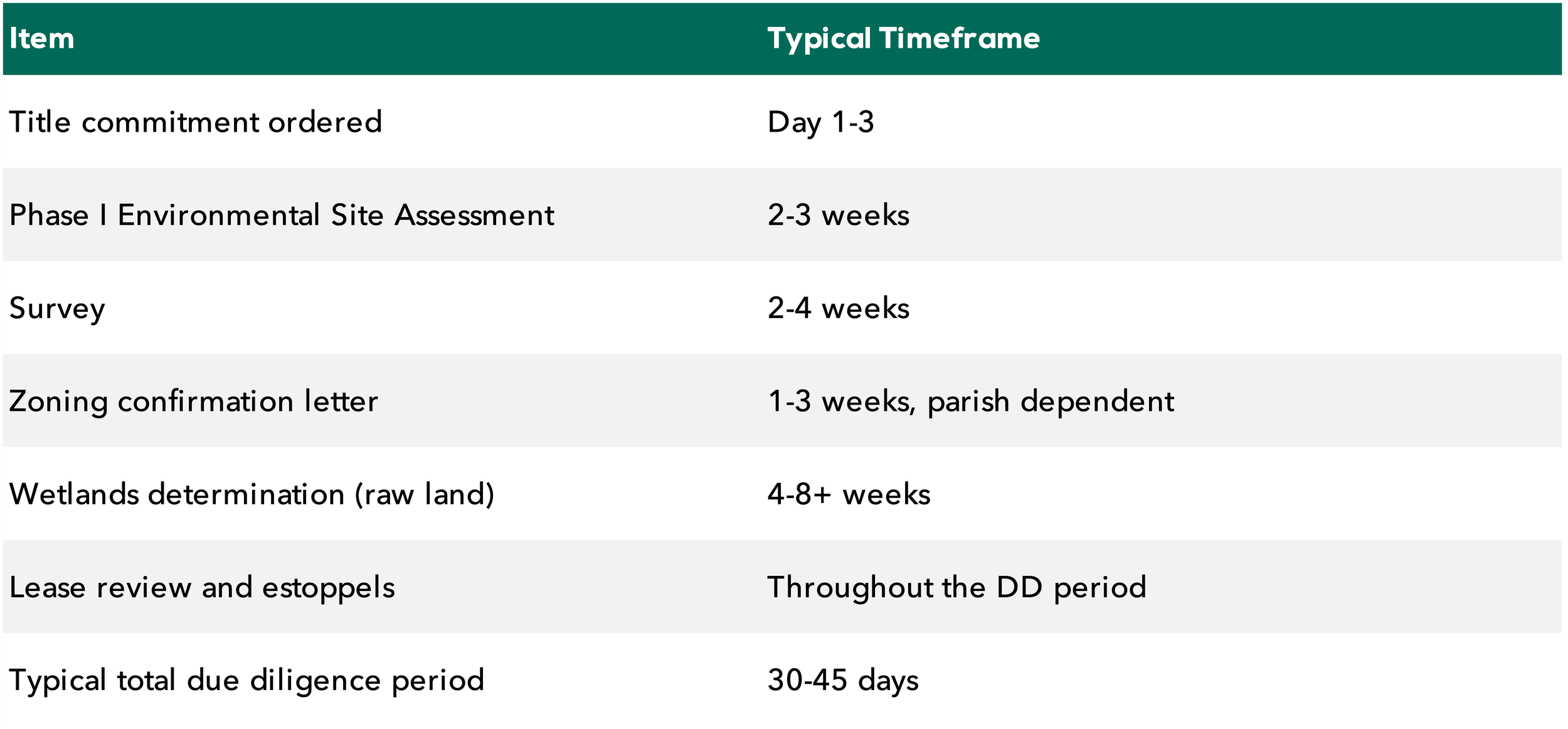
Order the title commitment the day you open due diligence, not the week before closing. Read the exceptions, not just the summary page. That is where servitudes, mineral reservations, and old rights of way show up. Pair it with a current survey to confirm the boundary, easements, and encroachments actually match what the title company is insuring. And get a zoning confirmation letter directly from the parish or city planning commission. The seller's flyer says commercial. The planning commission's letter is the only version that holds up when you apply for a permit.
Environmental Is Not Optional
A Phase I Environmental Site Assessment is non-negotiable in a market with our industrial history along the river corridor. Have your environmental consultant pull the site's history through the Louisiana Department of Environmental Quality's records system, not just the aerial photos. If the Phase I turns up a recognized environmental condition, order the Phase II before you close, not after. A contamination problem you discover as the new owner is your contamination problem.
Zoning Has More Nuance Than the Map Shows
Zoning categories that look similar on paper can carry very different rules. One commercial classification might cap you at a handful of fueling positions and prohibit a car wash outright, while the classification next door allows a convenience store with gas sales as a matter of right. Confirm your intended use is actually permitted, not just “commercial,” and check the parish's Future Land Use designation too. A property zoned for your use today can still sit inside a broader Mixed Use future land use area that shapes what gets approved on the next request. Get it in writing before you are under a tight due diligence clock.
Flood Zones and Stormwater Will Shape Your Site Plan
Pull the FEMA flood determination early. The difference between Zone X and Zone AE can move your insurance by five figures a year, and it can also trigger drainage requirements you did not budget for. In East Baton Rouge Parish, a site inside a designated conveyance zone that involves fill or new construction can require an Offsite Drainage Assessment against the parish's stormwater master plan hydraulic model, proving your project creates no adverse impact downstream. That is an engineering scope and a timeline item, not a checkbox. Ask about it before you are thirty days from closing.

Wetlands, If You Are Buying Raw Land
Undeveloped parcels need a wetlands determination early in the process, not late. A wetlands finding can limit what you are allowed to build or require mitigation that adds real cost and real months. Engage a qualified wetlands consultant as soon as you have the property under contract, because this is one of the few due diligence items that can outlast your due diligence period if you wait to start it.
The Leases Are the Real Diligence
If there is income, the rent roll is the seller's story and the leases are the fact-check. Read every lease in full. Verify the CAM reconciliation methodology matches what is actually being billed. Get estoppel certificates from tenants confirming their rent, term, and any side agreements independently of what the seller told you. If there is a lender in the picture, line up subordination and non-disturbance agreements early, because they take longer than anyone expects.
Due Diligence Timeline at a Glance
The Bottom Line
Louisiana due diligence rewards buyers who know the state's quirks and punishes the ones who assume our rules match everyone else's. Order title and environmental first, because they take the longest. Get zoning and flood determinations in writing. Read the leases yourself. None of this is complicated. It just has to actually get done, on a timeline, by someone who has done it here before.
If you are under contract in Baton Rouge or anywhere in South Louisiana and want a due diligence checklist built around your specific deal, call us at (225) 408-6595. Momentum Commercial Real Estate, 9420 Old Hammond Hwy, Baton Rouge, LA 70809.