
Commercial Lease Types Explained: NNN, Gross, and Modified Gross
We love acronyms in the real estate business. NNN, FSG, MG, CAM. Behind all of them sits one question, and it is the question that decides what your space actually costs: who pays the operating expenses, you or the landlord? This guide breaks down the three commercial lease types you will see in the Baton Rouge market, the triple net (NNN) lease, the gross lease, and the modified gross lease. Learn these three structures and you can walk into any lease negotiation in town knowing exactly what the quote means.
Why the Lease Type Matters More Than the Rent Number
Two spaces get quoted to you. One is $22 per square foot. The other is $28.50. Most tenants assume the first one is the deal. Sometimes it is. Often the $22 number is a triple net quote, the $28.50 is a gross quote, and once you add the pass-throughs they cost about the same. The rent number without the lease type is not information. It is half a sentence.
Every commercial lease sits somewhere on a spectrum. On one end, the tenant pays base rent plus every operating cost of the building. On the other, the tenant pays one number and the landlord handles the rest. The three structures below are the standard stops along that spectrum.
The Triple Net (NNN) Lease
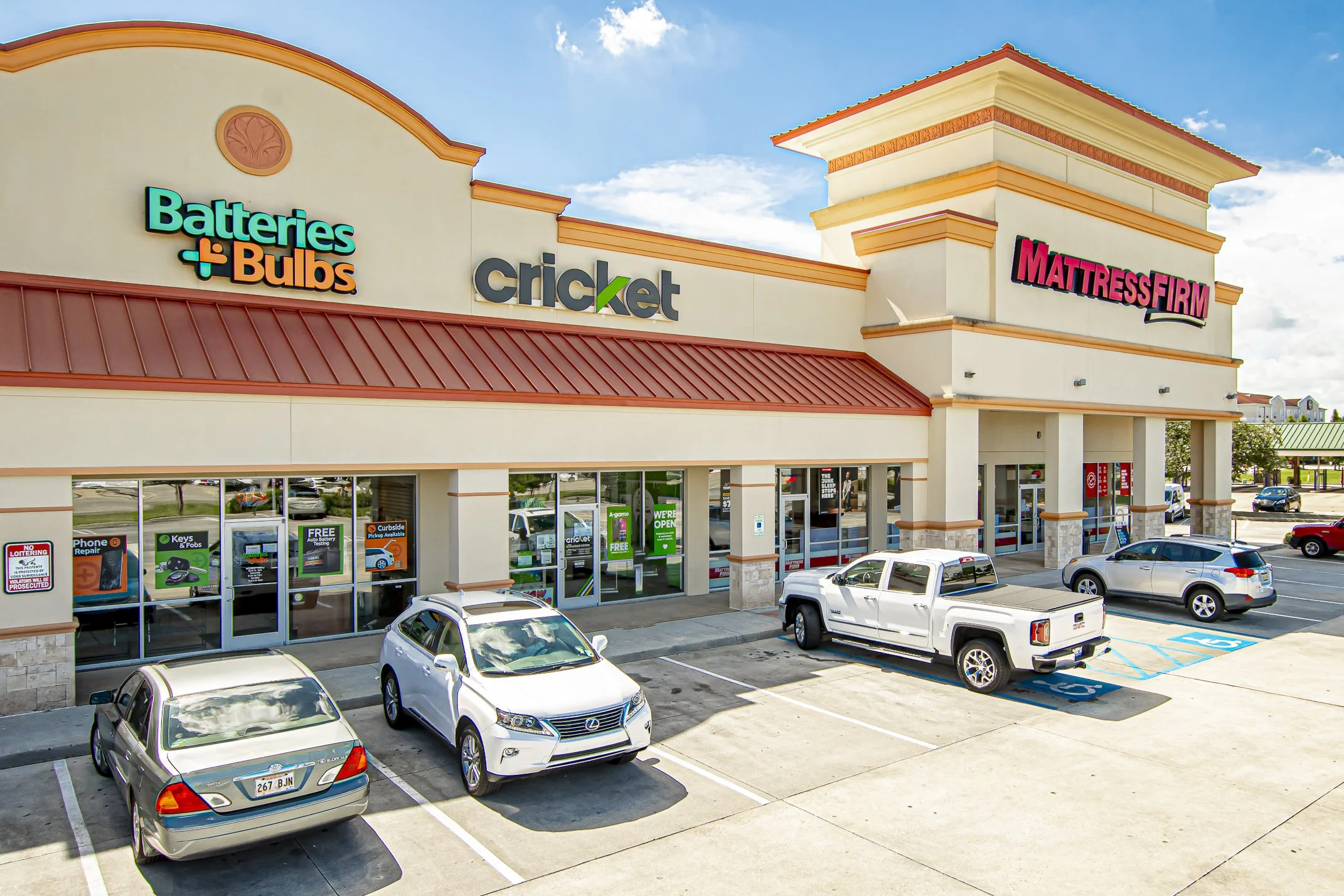
The triple net lease is the workhorse of retail and industrial real estate, and it is the structure you will see on nearly every retail center and freestanding building in Baton Rouge. The three nets are property taxes, property insurance, and common area maintenance (CAM). Under an NNN lease you pay base rent plus your pro rata share of all three, and you typically cover your own utilities and janitorial on top of that.
Commercial lease signing for retail space in Baton Rouge, Louisiana
The logic is simple. The landlord gets a predictable net number, and the actual costs of operating the property flow through to the tenants who use it. When the parish reassesses or the insurance premium jumps, that increase lands on your side of the ledger, not the landlord's. And in South Louisiana, insurance is not a rounding error. It has been one of the three I's, Inflation, Interest Rates and Insurance, pressuring every deal in this market for several years.
What to do about it: before you sign, get the current expense history and ask how CAM is calculated, what is excluded, and whether there is a cap on annual increases in the controllable expenses. A CAM cap is one of the most valuable and least requested concessions in a retail lease. For context on where rents sit today, the 2026 TRENDS survey put average non-anchor retail rent in Baton Rouge at $22.17 per square foot, quoted NNN. More on that market in our guide to retail space for lease in Baton Rouge.
The Gross Lease (Full Service)
On the other end of the spectrum sits the gross lease, sometimes called full service gross. One number covers base rent, taxes, insurance, CAM, janitorial, and usually most utilities. This is the standard structure in Class A and B office buildings, where dividing up the electric bill for a shared tower would be nobody's idea of a good time.
Commercial lease signing for retail space in Baton Rouge, Louisiana
The appeal is budgeting certainty. You know your occupancy cost to the dollar, and the landlord's problems stay the landlord's problems. The trade-off is that the landlord prices that risk into the rent, so the headline number runs higher than a net quote for comparable space. Class A office in Baton Rouge is asking around $23.81 per square foot full service. Read the fine print on after-hours HVAC and any provision letting the landlord bill for above-standard usage. Our guide to office space for lease in Baton Rouge covers the rest of that checklist.
One more wrinkle, and it matters: most Class A full service leases in this market are not pure gross. They include a base year expense stop. The landlord covers operating expenses at their level in the first year of your term, the stop, and you pay your pro rata share of any increases above that stop for the remainder of the term. So your rent is fixed, but your exposure to rising taxes, insurance, and operating costs is not zero. It starts in year two. Two diligence rules: confirm the base year is grossed up to reflect a fully occupied building, and get the expense exclusions in writing before you sign.
The Modified Gross Lease
The modified gross lease is the compromise, and in Baton Rouge it has a fairly standard shape: the landlord pays the property taxes and insurance, and the tenant pays its own utilities, interior maintenance, and janitorial. The swing item is CAM. Sometimes the landlord covers it, sometimes it passes through to the tenant, and that single line item can move your real occupancy cost by a dollar or more per square foot. Never assume. Ask.
Here is the thing about the label: modified gross has no fixed definition. Two landlords in this market can both quote you modified gross and mean two different deals. So the term sheet needs to spell out expense responsibility line by line, taxes, insurance, CAM, utilities, janitorial, interior maintenance, before you compare that quote against anything else. One boundary should hold in any version of this lease: roof and structure stay on the landlord's side of the ledger.
Commercial Lease Types Compared
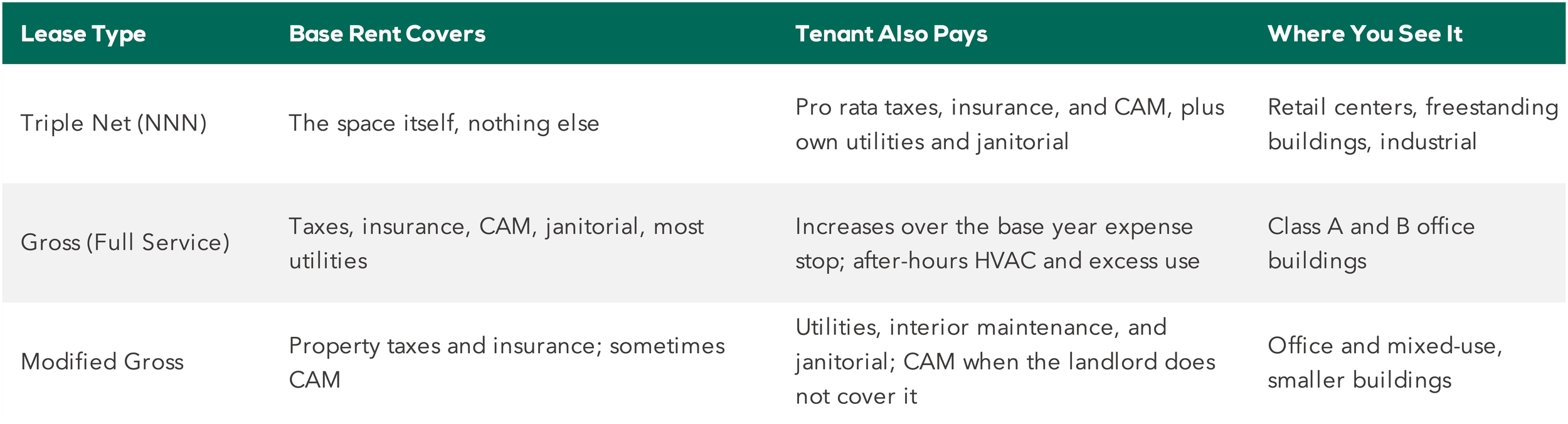
Here is the whole article in one table.
How to Compare Deals Apples to Apples
Never compare two deals on base rent alone. Convert every quote to a real occupancy cost per square foot: base rent plus estimated pass-throughs plus anything else you carry under that structure. Back to our two spaces from the top:
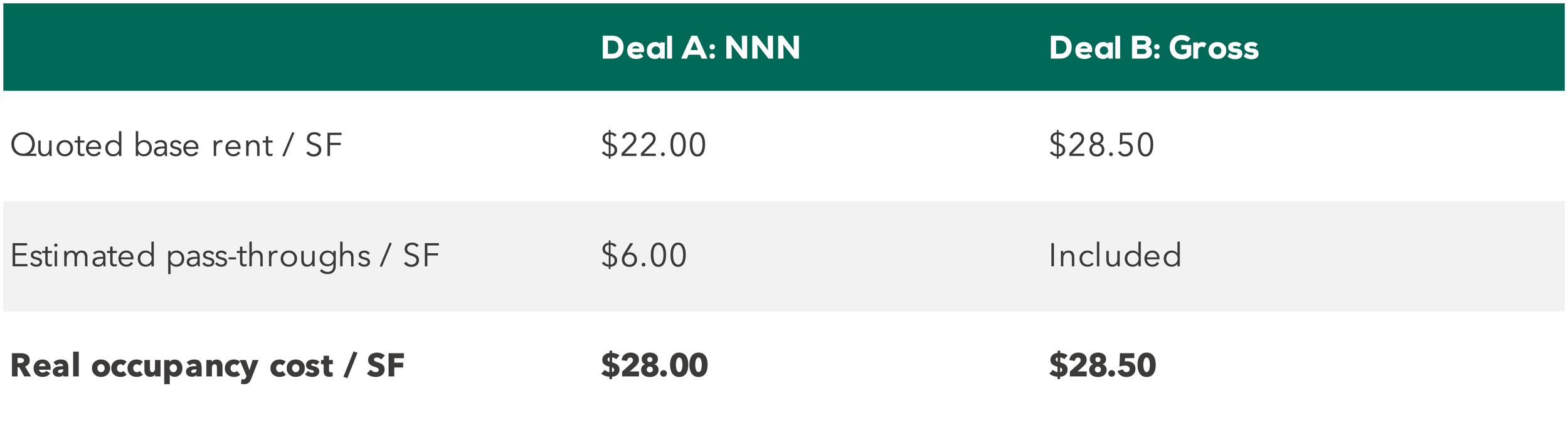
The $22 space is cheaper, by fifty cents, not the $6.50 the headline suggested. Now layer in the trajectory. The NNN tenant carries the risk of tax and insurance increases every year of the term. The gross tenant carries almost none. Depending on your view of where insurance premiums in South Louisiana are headed, that fifty cents can be the cheapest risk transfer you ever buy, or money left on the table. That is the actual comparison, and it is the conversation your broker should be leading.
What You Will See in Baton Rouge

The market sorts itself predictably. Retail centers and freestanding buildings quote NNN, nearly without exception. Industrial and flex space quote NNN. Multi-tenant office towers quote full service, and smaller or older office products frequently land on modified gross. If a landlord quotes you a structure outside those norms, it is not automatically a problem, but it is a question worth asking.
Lease structure is also where market conditions show up in disguise. In tight corridors, landlords hold the line on caps and exclusions. In softer submarkets, those terms are winnable. For the current state of play across sectors, see our Summer 2026 Baton Rouge commercial real estate market update.
The Bottom Line
The lease type tells you who carries the operating cost risk. NNN puts it on the tenant, gross puts it on the landlord, and modified gross splits it at a negotiated line. None of the three is inherently better. The right answer depends on your business, your risk tolerance, and how well the specific language is drafted. That last part is where deals are won and lost.
If you are evaluating commercial property for lease in Baton Rouge and want the quotes translated into real numbers before you commit, Momentum Commercial Real Estate does this every day. Call us at (225) 408-6595 and we will run the comparison with you.